Naples Rione Sanita Guide: Ultimate Itinerary & Hidden Gems
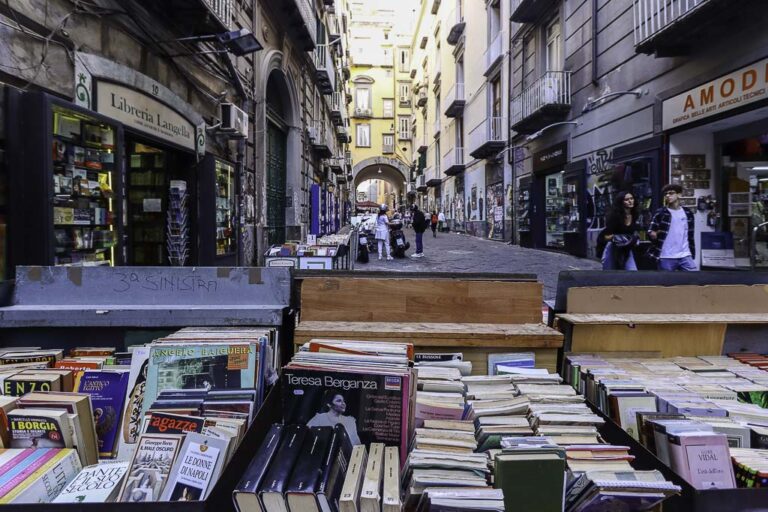
We love the Rione Sanita’ and believe it’s one of the most underrated areas of Naples. Not only you’ll find the folklore and what in Naples is called “Veracita’”; but you’ll get all the best the city has to offer. Some of the most iconic pizzeria are here, poppella and the tasty fiocco di neve,…
We love the Rione Sanita’ and believe it’s one of the most underrated areas of Naples. Not only you’ll find the folklore and what in Naples is called “Veracita'”; but you’ll get all the best the city has to offer. Some of the most iconic pizzeria are here, poppella and the tasty fiocco di neve, Old palaces that have made the history of Naples.
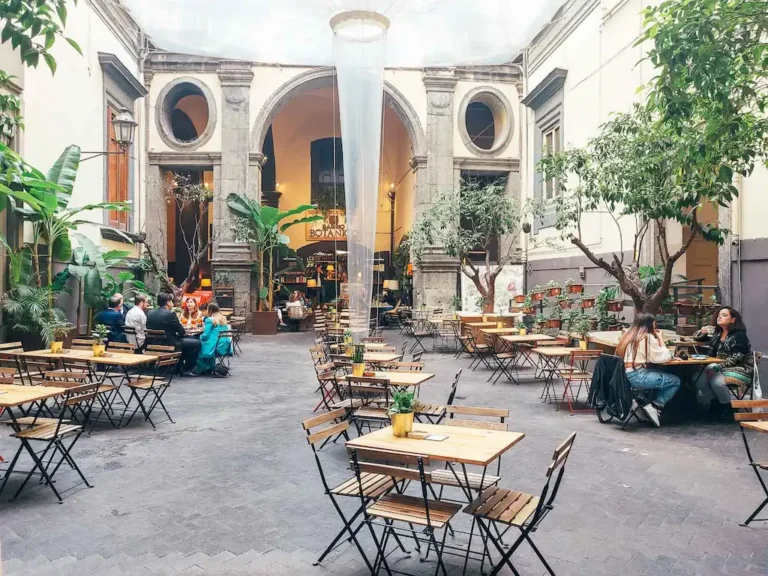
Walking through we found that every single little alley, charming corner, and courtyard of noble buildings has a history. In fact we quickly get why it’s so attractive, the Rione Sanità is one of the oldest districts of the historic centre of Naples.
The morning was quiet hot, it was in spring, when the city seems more buzzing. Shops were all opens, the market was full of locals buying grocery. Fruit and vegetables here start from just €1. Definitely Sanita’ distric is one of the cheapest locations in Naples. Also, one of the most suggestive we’ve seen. Just on the foothill of Capodimonte hill.
While it was a no go area before, it’s now a safe part of Naples, rooting in its community. In fact we visited the Vicolo della Cultura, which is the first institution against local mafia. The Church of Cristallini was a nice discovery too, symbol of a resilient community.
This guide highlights the rebirth of the Sanità District, once infamous for poverty, criminality, and neglected areas.
Why Visit Rione Sanità?
Unique Heritage: The district has many layers that tell the story of Naples’ history. You can find Greek and Roman burial grounds, as well as delve into the rich past through aristocratic palaces (some preserved) and a dense network of churches.
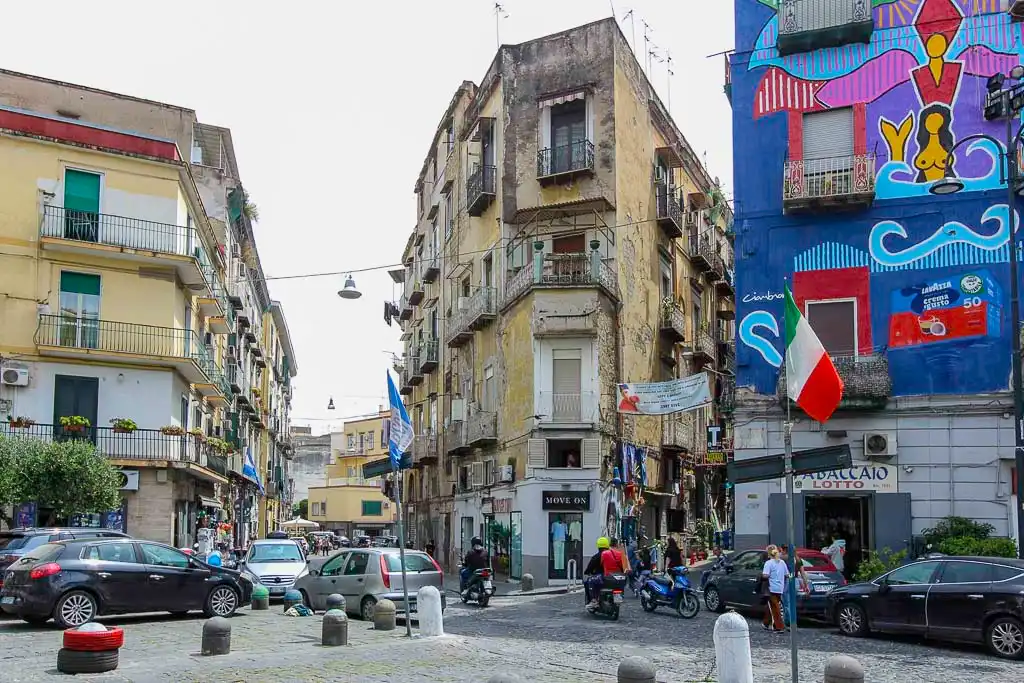
Locals enhancing the district culture: Growing in Naples, we knew that Sanita’ was a dangerous area. Somewhere to avoid. Well, not today. Actually, it’s where we were most inspired. The gritty walls now have graffiti, and the community is proud. Very inviting. They know that tourism can change the sort of an infamous area, faster than ever.
Locals, especially youth organisations, work together to rebuild from the ground up the credibility of one of the most important areas of Naples. Tourism is booming, helping the quarter to grow at the same pace as the Spanish Quarter, thrive, and set an example for the rest of the city. Today, it’s one of the safest and most popular areas to stay in Naples.
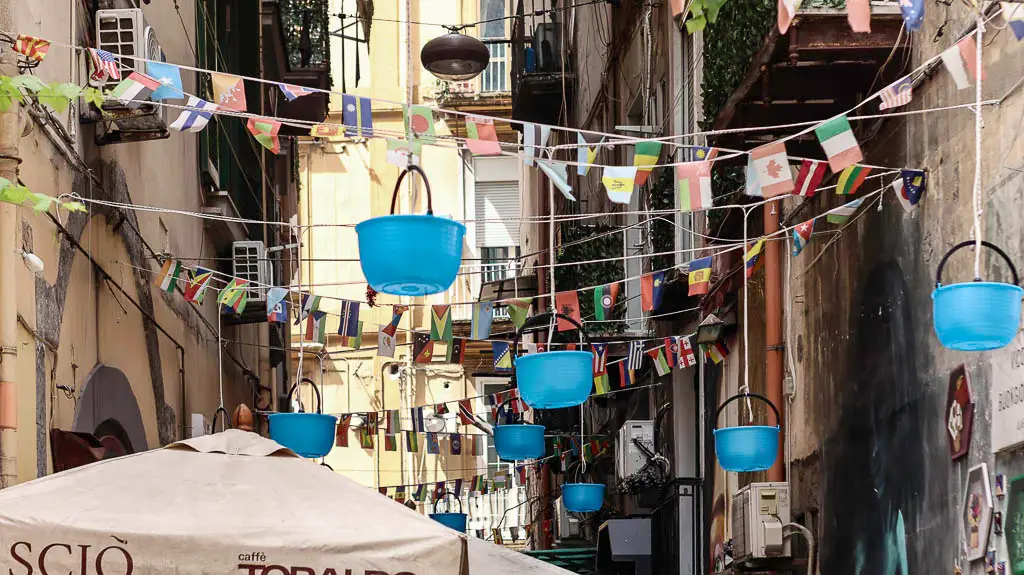
Authentic Atmosphere: Despite these efforts, it maintains its authentic values. Exploring Rione Sanità, you’ll enjoy the bustling markets, colourful alleys, murals and the unmistakable energy of local life. Without a doubt, it is one of the most immersive experiences in Naples.
Local Experiences Not to Miss
- Engage with Locals: Strike up conversations with shop owners or residents; you’ll often hear fascinating stories and get insider tips.
- Attend a Show at Nuovo Teatro Sanità, A vibrant community theatre housed in a restored 18th-century church, central to the area’s cultural rebirth. Check their schedule for current performances.
- Visit Totò’s Birthplace: Via Santa Maria Antesaecula 109, a pilgrimage site for fans of the legendary comedian.
14 Things we did in Rione Sanità
- Porta di San Gennaro
- Jago Museum
- Palazzo dello Spagnolo
- Ipogeo dei Cristallini
- Cristallini Church
- Catacombs
- Santa Maria Church
- Fontanelle Cemetery
- Vicolo della Cultura
- Mercato dei Vergini
- Enjoy Piazza Sanità’ Murals
- Oldest Pharmacy in Naples
- Pastry at Poppella
- Eat a pizza at Concettina ai Tre Santi
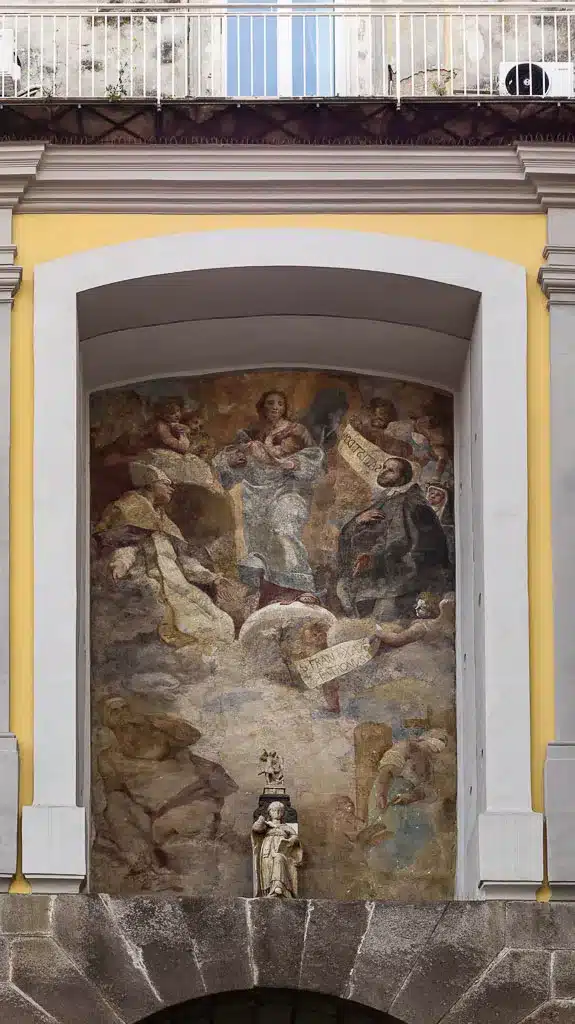
Start at Porta di San Gennaro
Starting your itinerary from Cavour Metro Station, you’ll pass by Porta di San Gennaro. Documents state that the San Gennaro’s Gate has been there since 928 A.D. However, it was only with Spanish rule that it was incorporated into the city.
Above the gate, you can admire a votive fresco by Mattia Preti (In the photo above). This is the oldest access to Naples’ walled city and still stands.
Naples Sanità was located outside the Naples centre, in a rural area with a few spare buildings and fields. Another incredible one is Porta Capuana, near Naples Train Station.
Jago Museum
The second place we hope you’ll visit in the Sanità District is right by the entrance of Piazza Cavour. Jago Museum is a permanent exhibition hosted in a church. The sacred atmosphere, combined with the extraordinary art of Jago, makes it an unmissable experience.
The art space features innovative sculptures. Jago defines himself as a socially motivated artist and integrates community ideals into the identity of Rione Sanità.
The entrance fee to the Jago Museum is €10. A guide will take you around, explaining the meaning and significance of each sculpture.
About the Artist
Jago, whose real name is Jacopo Cardillo, is a contemporary Italian artist known for his incredibly realistic sculptures. He gained international recognition for his fantastic marble works. Masterpieces that take inspiration from human vulnerability and social impact.
I was already a fan of Jago before heading to Naples, having watched a cold piece of marble come to life through its social media videos.
Palazzo dello Spagnolo & Palazzo Sanfelice
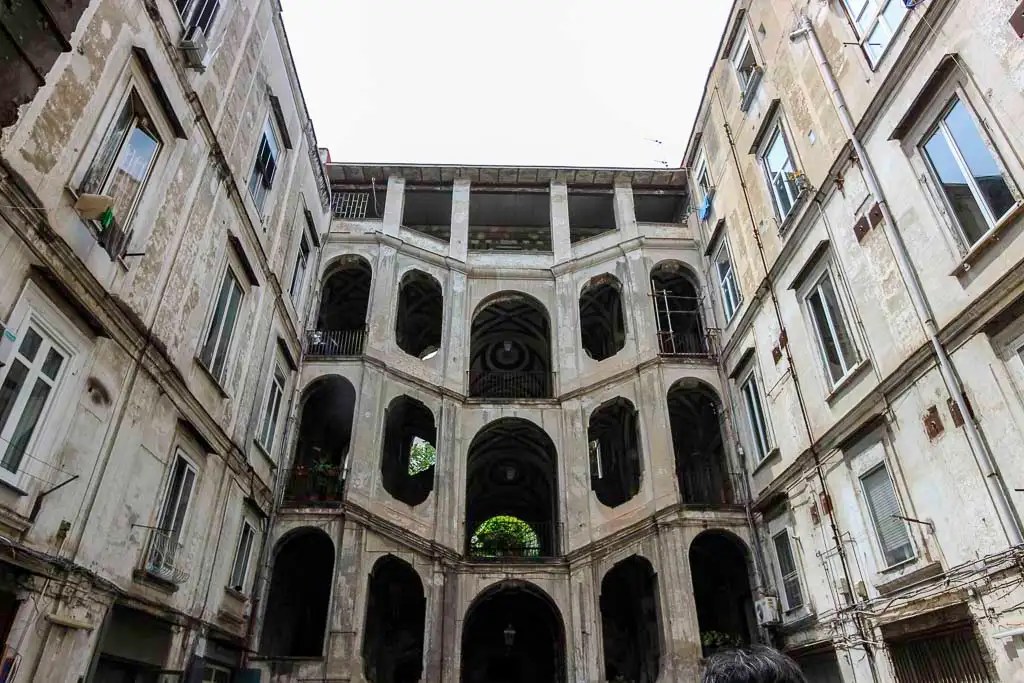
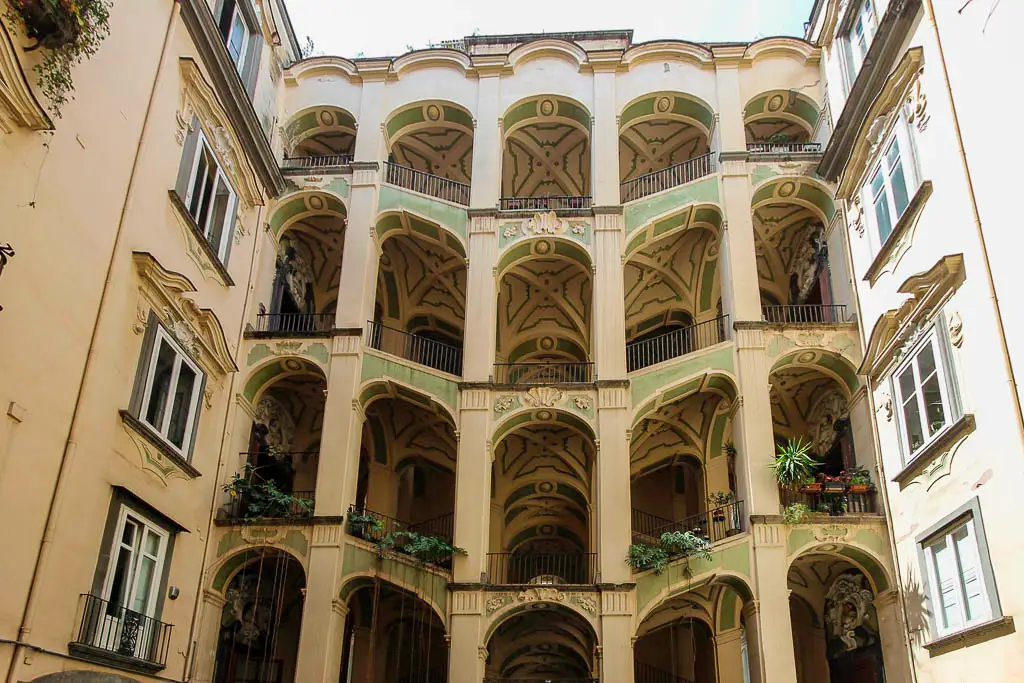
Continuing our walk through Rione Sanità, you’ll pass by Palazzo dello Spagnolo. This magnificent 18th-century palace boasts two grand staircases and intricate details. The facades are a dream for every photographer in the proper Baroque Style.
Residents live here, and they close the staircase entrance to visitors. Please respect their privacy and refrain from trespassing.
Actually, the Palazzo dello Spagnolo (The Palace of the Spanish) is a restored version of Palazzo San Felice. Built in the same period by one of the most renowned architects and painters in Naples, Ferdinando Sanfelice.
Due to the neglected and historic state of Sanfelice Palace, it has been featured as the film set of many popular movies. You might have watched or heard of Gomorrah. The entrance to these buildings is free and featured in every guided tour of Naples Sanità.
Ipogeo dei Cristallini
This place was a very nice surprise. We stumbled upon the entrance of the Ipogeo dei Cristallini, which is tucked away into an Aristocratic building. The archaeological museum is an ancient underground tomb and only recently opened to the public. In 1889, the Barone di Donato, owner of the complex, found paintings, artefacts and funeral equipment in the lower ground basement.
The guided tour (Booking necessary – Check it here!) will take you through 14 areas of interest. Within these tombs and old narrow alleys (Via dei Cristallini), there are anterooms and tombs, and some of them feature Dionysus, Medusa, and Ariadne.

Chiesa dei Cristallini
The underground Via dei Cristallini eventually leads to the crypt of Chiesa di Santa Maria Maddalena ai Cristallini. This is often referred to as the Blue Church of Sanità District, and it has the neighbourhood redemption role. The Church is totally painted with over 20 shades of Blue. The Church is open to visitors every day from 10 AM to 1 PM.
Catacombs of San Gennaro and San Gaudioso
Naples is full of catacombs and underground passages. There are actually two that you can visit in the Sanità District: San Gennaro and San Gaudioso.
The Catacombs of San Gennaro are among the oldest in Europe. This was the last passage for Christians, buried there at the early stage of the religion.
Instead, the San Gaudioso Catacombs are a more recent discovery with better access. In fact, you can enter through the Basilica, and by taking the guided tour, you’ll discover mosaics and frescoes perfectly maintained. Still, this was one of the early Christian burial places.
Both historical passages are accessible and offer guided tours.

Basilica di Santa Maria della Sanità
We explored the district and were pleased to see how a once-notoriously dangerous area has now become a thriving community. Visiting San Gaudioso, you enter the Basilica of Santa Maria della Sanità, the heart of the district. The church features a baroque dome with unusual yellow and green majolica.
LOOKING FOR THE BEST THINGS TO DO IN NAPLES?
– Naples One day itinerary by locals
– A Guide to Naples Spanish Quarter
Fontanelle Cemetery
Currently close, the Fontanelle Cemetery is an important sight in the Sanità District. It’s a haunting ossuary filled with thousands of skulls and bones. We get that not everyone feels comfortable to visit it. You’ll see real human bones and skulls, walking through a Catacombs style ossuary.
It hosts the remains of poor souls, left without proper handover ceremony. More often without a name on it. People of Naples shows their generosity to the others, giving offerings, lighting a candle and praying. It is stated that the ossuary was built and maintained between the 17th and 19th Century.
The cemetery is central to the local “anime pezzentelle” cult – The poor souls, where Neapolitans “adopt” skulls in exchange for favours and good luck. Yep, Naples is a very superstitious city.
Vicolo della Cultura & Sanita Murals
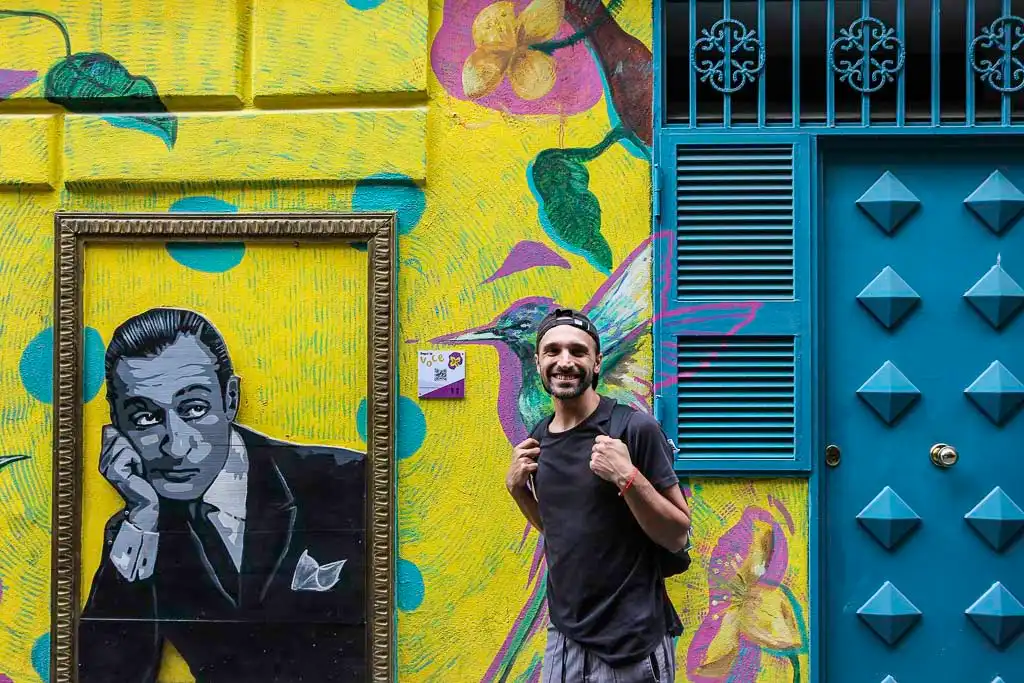
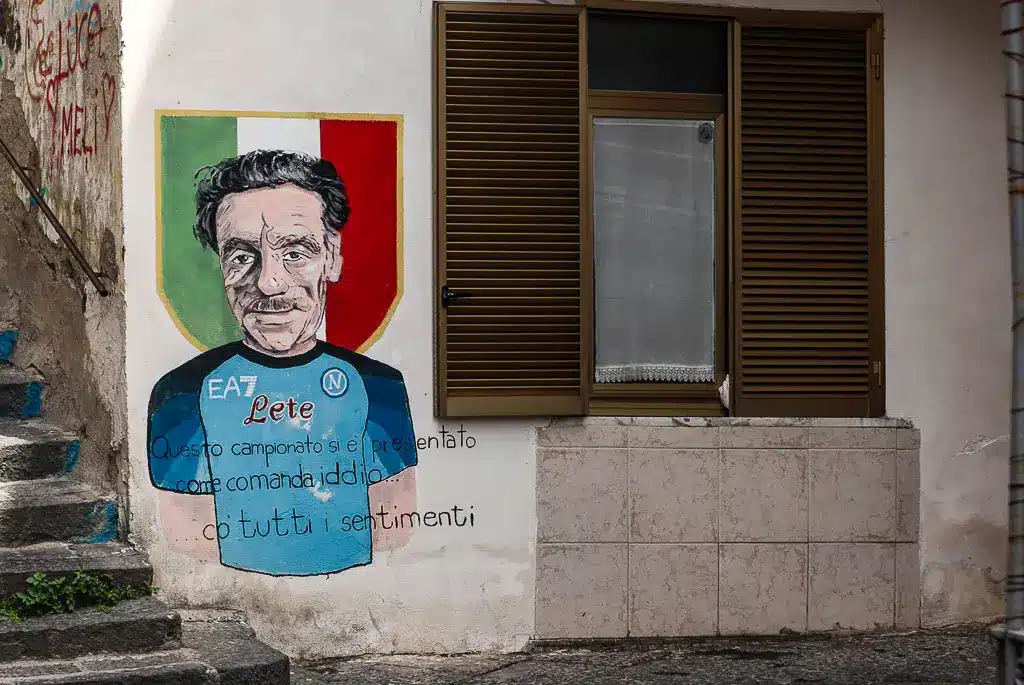
Naples is creative, and in the most difficult districts, you’ll find talented artists. I was amazed in some corners. One of my personal favourites is Vicolo della Cultura. We entered Via Montesilvano, and on the right-hand side, you’ll see the first mural. Locals have created a safe space within the narrow lanes, in between one old shophouse and another.
This is also one of the places we suggest staying in Naples. There are numerous Airbnb options available at a very reasonable price. Anyway, Vicolo della Cultura translates to “Culture Alley.”
In fact, you can see murals and banners of people who made Naples great and well-known worldwide. Just at the end of the road, walking 30 metres to the right, you can see (from the Outside) the house of Toto. Antonio de Curtis, known as Totò, was a beloved Neapolitan actor and comedian born in Rione Sanità.
Mercato dei Vergini
Upon entering the Sanità District from the Cavour Metro Station, you’ll find yourself on Via dei Vergini. It is a bustling shopping street and open-air market. Local shops here every day. Within the market, there is the Palace of the Spanish, the Chiesa Santa Maria dei Vergini and continues up to Via dei Cristallini and Via Arena della Sanità’.
Within this market, you can sample street food, experience and breathe local life. It is the core of the neighbourhood.
Eat a pizza at Concettina ai Tre Santi
Concettina ai Tre Santi is more than just a pizzeria; it’s a culinary institution in the Rione Sanità district, something that takes people to the district. This family-run establishment is one of the best pizzeria in Naples, and also one of the oldest.
We’ve tried their pizza, and it’s up to the standards. Afterall, we are talking about a Michelin Star Awarded pizzeria. Still not our top of the list, but in the best 10 definitely.
They are known for their innovative approach to pizza-making, combining traditional techniques with creative toppings and modern twists. If you find it busy (most likely), another pizzeria we suggest in Sanità District is Oliva, right in Piazza Sanità’.

Enjoy Piazza Sanità’s Murals
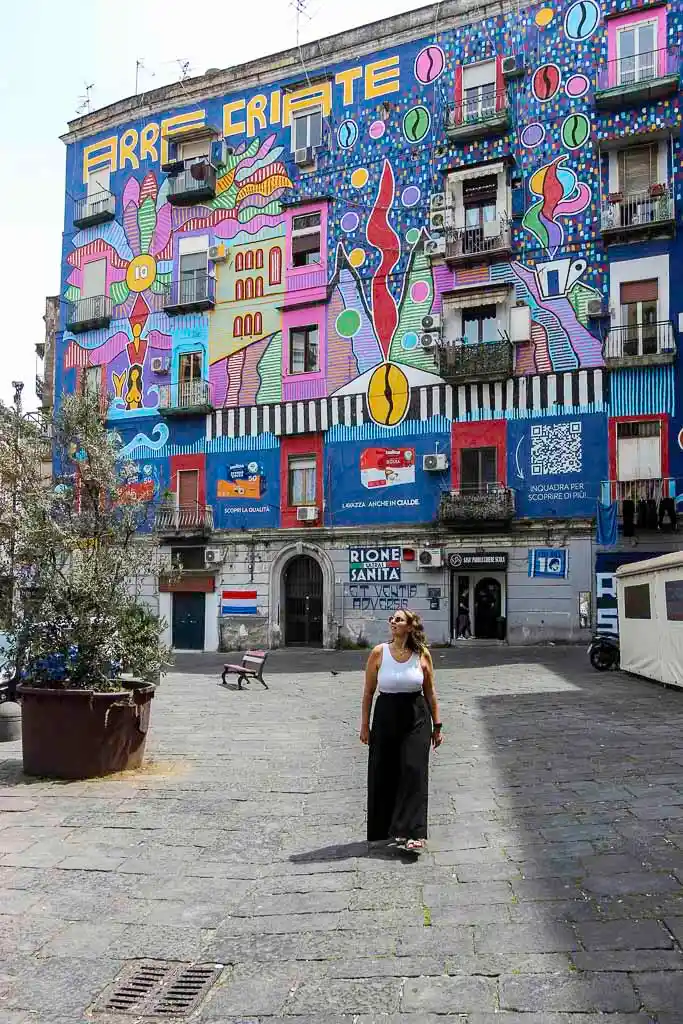
Piazza Sanità is not just a central square; it’s an open-air gallery. We were impressed! The piazza is very large, and concerts are often held here. One of the biggest facades you’ll see is a massive mural with all the symbols of Naples: the Volcano, coffee, San Gennaro, and Partenope Mermaid.
The Basilica of Santa Maria della Sanità is wonderful. I was in awe of the marble details, particularly the double staircase that led to the pipe organ above the altar.
On the side of the Church, you must walk down the stairs that lead to the crypt. The ceiling and floor tiles are impressive, featuring four votive niches per side. This small chapel is open only for sporadic masses.

Explore the best hidden gems in Naples
Santa Chiara Cloister | Photospots in Naples
Oldest Pharmacy in Naples
Ale almost lost track of me, while I was wandering at the details of this pharmacy. We were almost at the end, by the lift to pedamedina. It’s easy to get lost here. At somepoint I look inside the queue of people, and see an old 1577 Pharmacy. The place is so small that only allow 5 people at time inside.
The location is, unmistakable, Farmacia S.Maria della Sanità, at number 121 of Via Sanità, right in front of the elevator that takes you from Sanità’s upper street to the lower ground. I walked in and was in awe.
You’ll spot in in the original fixtures and fittings, including antique wooden cabinets, old apothecary jars, and a palpable sense of history that pervaded the air.
Even if you don’t need to make a purchase, it’s worth a visit to admire the interior. I was descreet, always ask permission and try to avoid take photos of people inside.
Pastry at Poppella
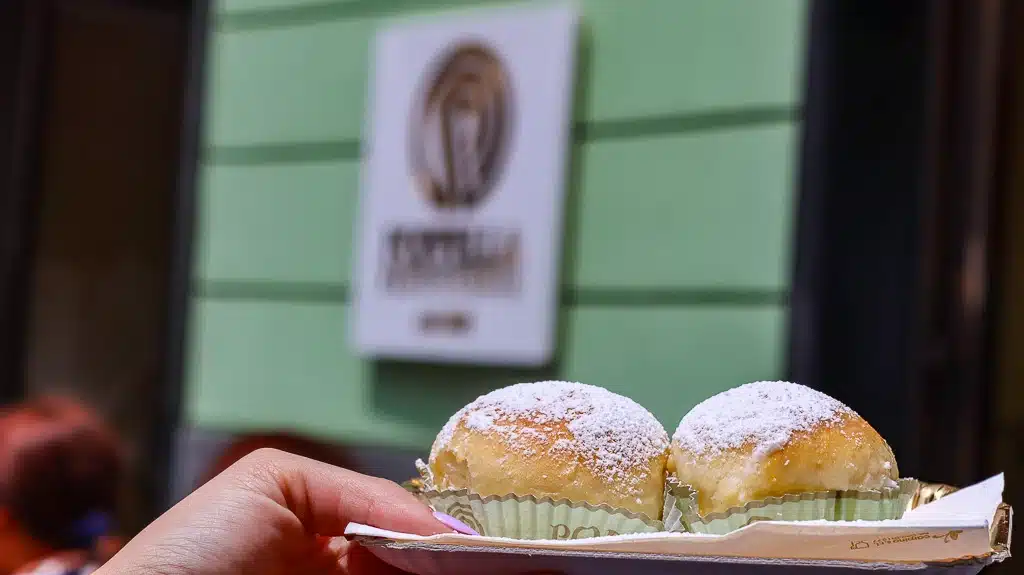
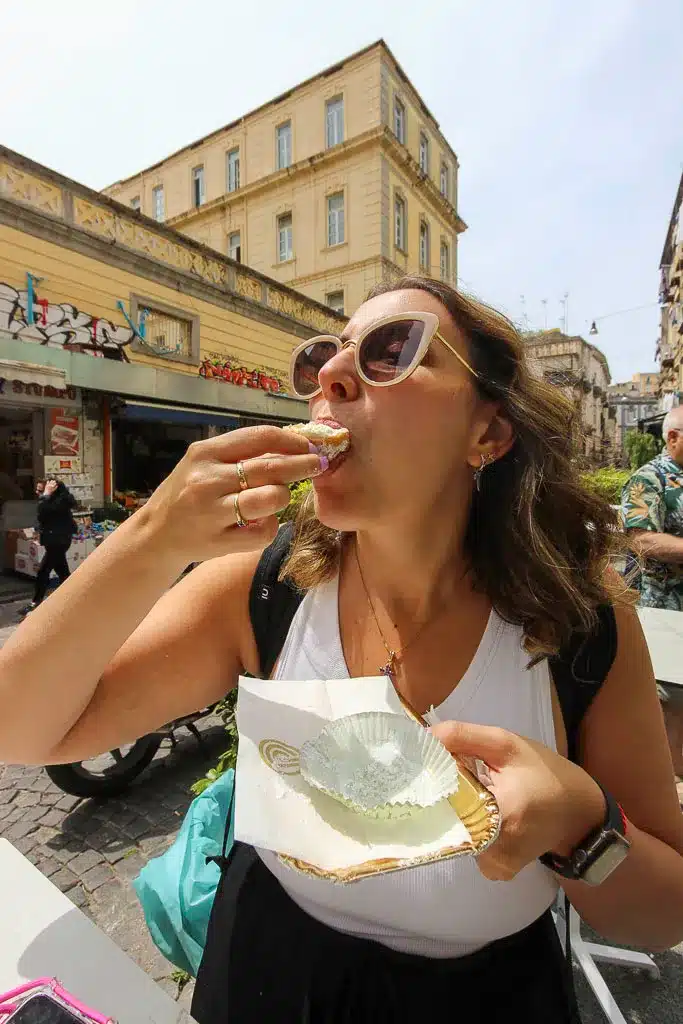
We had to eat it carefully, the filling is velvetty but you might get dirty. Let’s call it the dirty pastry, isn’t it? The shop was full, that we had to wait in line for about 10 minutes just to have the “scontrino”, before actually have our little tray.
No visit to Rione Sanità is complete without a stop at Pasticceria Poppella. It was one of the must stop for us. This famous bakery is renowned for its “Fiocco di Neve” (Snowflake), a delicate pastry filled with a light, creamy filling.
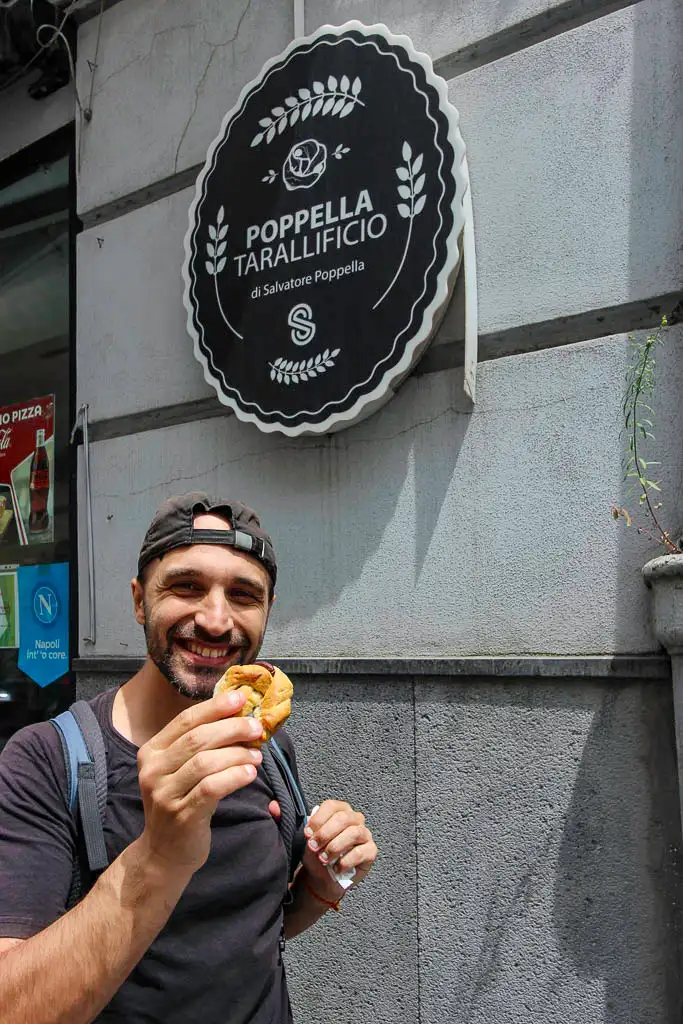
We’ve actually also stopped at the Tarallificio Poppella, which often create confusion for many tourists. The Bakery is right at the entrance of the District, while the tarallificio (which is where they make hard bread filled, shaped ring dough.
The fiocco di neve at poppella is a sensation for locals. It melts in your mouth, making you want more. We had 5 of them in a range of 10 minutes. There were no tables available inside, so we got our spot outside. High table and no chairs. An old couple from Spain were so satisfied, that went also back inside for more.
We did the combo like proper locals. Fiocco di Neve and espresso. The price is very reasonable, €2 for a snowflake pastry and €1,50 for an espresso (double shot). We place Poppella in the list of best cafes of Naples, mainly because of the snowflake.
Practical Tips
Read our guide filled with tips for first-timers in Naples.
- Guided Tours: Several local groups offer immersive walking tours (2–3 hours) covering catacombs, churches, palaces, and street art. Tours often start at Porta San Gennaro or the Church of Sant’Aspreno ai Crociferi.
- How to get to Rione Sanità: It’s easy to get to Rione Sanità, as it’s centrally located within Naples’ historic centre. The nearby metro station is Cavour, located on Metro Line 1, 2 stops away from Naples train station.
- Accessibility: Some sites, especially the catacombs and Fontanelle Cemetery, may not be fully accessible for those with mobility issues. We advise checking in advance. Overall, navigating roads in Naples can be challenging, so wear proper footwear and stick to the main alleys.
- Best Time to Visit: Mornings are busy with locals intent on doing grocery shopping at the market. However, it is perfect to soak into the picturesque atmosphere. It’s actually when we explored the Sanità district and took these photos. Afternoon instead is quieter, and we suggest going late. The district is less crowded, and there are only a few guided groups if you prefer to explore on your own.
- Safety: Although Sanità has shed much of its old reputation, as in any urban area, keep a close eye on your belongings and stick to the main streets after dark. Be particularly vigilant in crowded areas.
- Booking: It’s essential to book the Ipogeo dei Cristallini, Jago Museum and and other specific tours in advance. Check online here.
What to know about Sanità district history
Walking through the Rione Sanità, you might understand why locals are so happy to open it up to tourists. Already from the position, nestled at the foot of Capodimonte Hill, makes the streets and the upper road unbelievable. Buildings are within the rocks and the bridge, one on top of the other. After All, this is one of the oldest districts of Naples and is included in the boundaries of the UNESCO-designated historic centre of Naples.
The Rione Sanità was a necropolis during the Roman and Greek periods. While exploring, we went through many necropolis and underground station areas.
The modern Rione Sanità only became a resident area around the 16th and 17th centuries. In fact, the name means Health in Italian. Believe it or not, the fresh air and notable water springs that run underground gave this place its name as the healthy place in Naples. Because of this, most hospitals, recovery centres, and even religious institutions devoted to helping the sick have started to build around here.
We took a tour, and although we had a planned loop itinerary, we made more stops than initially anticipated. Believe me, there are many places that you must plan to visit on a 3-hour walking tour around Naples’ Sanità. Below is a recommended walking itinerary for exploring the Sanità district, blending must-see historical sites, hidden gems, and contemporary highlights.
Where to stay in Naples Sanita
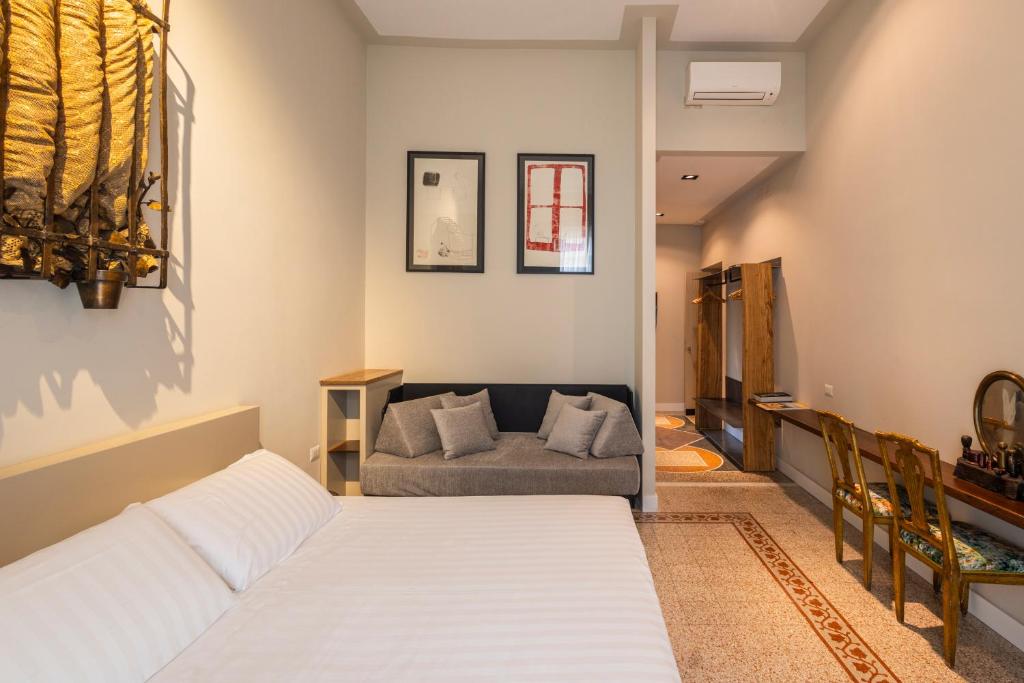
Via Dei Cristallini | Excellent location
Atelier Inès Arts & Suites
Rated 9.4/10! (score from 189 reviews)
BOOK HERE!
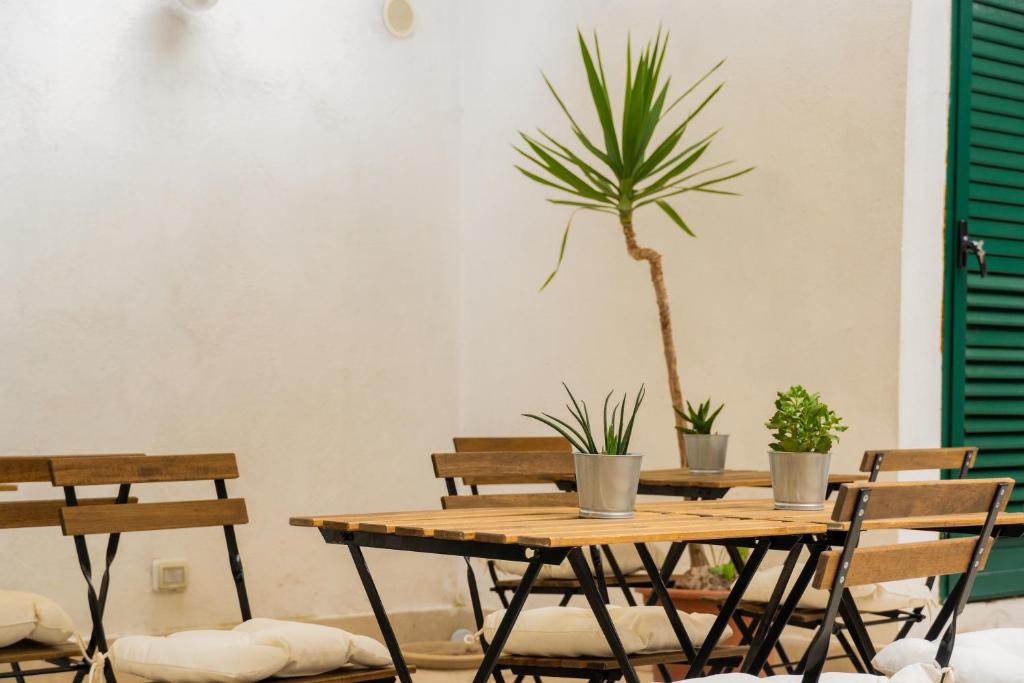
4 Vico Cristallini | Piazza Cavour station is within 350 m
La Puteca
Rated 9.3 (score from 438 reviews)
BOOK HERE!